
You are using an out of date browser. It may not display this or other websites correctly.
You should upgrade or use an alternative browser.
You should upgrade or use an alternative browser.
Vintage Combination Square
- Thread starter MShaw
- Start date

Packard V8
Well-known member
Very nice, very useful tool.
FWIW, Starrett came out with the combination square in 1880 and still sells them today. I've got several from 6" to 24" and use them all the time.
jack vines
FWIW, Starrett came out with the combination square in 1880 and still sells them today. I've got several from 6" to 24" and use them all the time.
jack vines
Dave455
Well-known member
Nice!
Thankfully, a decent combination square then, is still a decent combination square now!
I still use my Grandfathers, which is certainly pre war!
Enjoy...
Thankfully, a decent combination square then, is still a decent combination square now!
I still use my Grandfathers, which is certainly pre war!
Enjoy...
Tucko
Well-known member
Very nice, very useful tool.
FWIW, Starrett came out with the combination square in 1880 and still sells them today. I've got several from 6" to 24" and use them all the time.
jack vines
Yep, me too. My best score was a 12" Starrett machinist square.
$1.00
Smiliesafari
Well-known member
I have the same one. It's an excellent metal working tool.
Stuart in MN
Well-known member
I have and use a Stanley try square I got from my Dad. I don't know where he acquired it but it has a patent date from the 1890s on it.
Looks like this one:

Looks like this one:
RStewart
Well-known member
I drove by Starrett in Athol today.
paulm12
Well-known member

Mine is a #12 also. It has a serial number, lot number or ? 291 stamped on it and is definitely pre 1920 if this helps date yours. If it would help I will try to get a better picture and, hopefully, some stock or other numbers from the rule that is with it..
Last edited:
paulm12
Well-known member
where is the "291" stamp? I didn't see any on mine.
altersaddle
Well-known member
I've got a Craftsman set, a Starrett set (that's seen better days) and a Union Rule co combination square.
The Craftsman set is a bit odd, the manufacturer code is D J (Mitutoyo) but it's also stamped Made in USA...!
The Starrett rule is stamped "L. S. S. Co".
The Craftsman set is a bit odd, the manufacturer code is D J (Mitutoyo) but it's also stamped Made in USA...!
The Starrett rule is stamped "L. S. S. Co".
Attachments


paulm12
Well-known member
thanks MShaw. no markings on mine.
d42jeep
Well-known member
This is an old thread but I didn’t find a more appropriate one in doing a search. I found this Stanley #22 at a recent estate sale. I now only buy these squares if the scriber is included. The rule was a little rusty but evaporust worked its magic. This has two levels at right angles to one another, which I hadn’t seen before.
-Don


-Don
d42jeep
Well-known member
At the same sale that I found the square above I found the rusty treasure shown below. Even after evaporust the maker’s markings were illegible. I looked through some catalogs and found that a Union square was a close match. 

 I went through some spare rules and found a Union marked one in good shape and replaced the rusty one. At least the square is now useable.

-Don
I went through some spare rules and found a Union marked one in good shape and replaced the rusty one. At least the square is now useable.-Don
RTM
Well-known member
I've always thought of the Union's as having really Loopy Shapes, but your catalog listing doesn't show them. The older catalogs have both (yours earlier page)At the same sale that I found the square above I found the rusty treasure shown below. Even after evaporust the maker’s markings were illegible. I looked through some catalogs and found that a Union square was a close match.
-Don

Union Tool Company : Catalog No. Forty-One : Union Tool Co. : Free Download, Borrow, and Streaming : Internet Archive
24 p., illus., 17.4 cm, trade catalog
archive.org
d42jeep
Well-known member
Yeah, I have a drawer in my Kennedy roller of squares with some of both styles. It seems like the rules get switched around pretty often. Here is the listing that looks like mine in the ‘41 catalog you referenced. I’ll get some pictures of a variety of others from the drawer. 
-Don
-Don
d42jeep
Well-known member
I dug out my squares this afternoon. Here are some loopy Union squares.I've always thought of the Union's as having really Loopy Shapes, but your catalog listing doesn't show them. The older catalogs have both (yours earlier page)
Union Tool Company : Catalog No. Forty-One : Union Tool Co. : Free Download, Borrow, and Streaming : Internet Archive
24 p., illus., 17.4 cm, trade catalogarchive.org
-Don

d42jeep
Well-known member
More square pictures. There are no guarantees that the rules are correct to the squares but they probably are.
Goodell - Pratt

Brown & Sharpe
Lufkin
Stanley Handyman #1222 1/2

4” Millers Falls #1276
Some Starrett squares and pieces
Stanley 46-122
-Don
Goodell - Pratt
Brown & Sharpe
Lufkin
Stanley Handyman #1222 1/2
4” Millers Falls #1276
Some Starrett squares and pieces
Stanley 46-122
-Don
d42jeep
Well-known member
Stanley No. 21

Empire marked squares.
Miscellaneous square pieces.
Back in the drawers.


-Don
Empire marked squares.
Miscellaneous square pieces.
Back in the drawers.
-Don
WisJim
Well-known member
Here are most of my combination squares. I have 3 versions of the Stanley No 21, and my Union looking square (lower left) is marked "Orange Tool Co., Orange, Mass.". I think that Union and Orange Tool Co were related but I don't think that we ever figured out exactly how back in Nov. 2023.
RTM
Well-known member
Is the head, or the rule marked? If just the rule, those swap easy. Don’t remember that thread.Here are most of my combination squares. I have 3 versions of the Stanley No 21, and my Union looking square (lower left) is marked "Orange Tool Co., Orange, Mass.". I think that Union and Orange Tool Co were related but I don't think that we ever figured out exactly how back in Nov. 2023.


I bought ten of these center heads today, in hopes of adding some of them to existing combination squares. Unfortunately, they don’t all have the screw&nuts.
So far, I’ve added a texture-finish one to a smooth-finish Starrett square, based on the shape of the nut and the double notch that allows the pin to reverse 180°. Neither of the crosshatch-textured ones fit on my Starrett rules. I suppose there may be a Goodell-Pratt or maybe a Millers Falls.
IS there a one-stop ID-er thread or online source?

RTM
Well-known member
You can buy them from Starrett, and PEC via HJE
I bought ten of these center heads today, in hopes of adding some of them to existing combination squares. Unfortunately, they don’t all have the screw&nuts.
It's possible they are for 9" or 6" rules. The four left most look smaller. 6" is just under 2.5' tips to tail, 12" is a touch over 3"Neither of the crosshatch-textured ones fit on my Starrett rules. I suppose there may be a Goodell-Pratt or maybe a Millers Falls.
IS there a one-stop ID-er thread or online source?
Somewhere I have the dimensions for the rules and slots, but right now probably easier to go out and measure. Back in a minute
4: 0.638 x 0.065
6" 0.715 x 0.080? (In theory the 6" should fit the 9", but it doesn't, the notch does not fit the tongue, or I'm really clumsy tonight)
9" 0.875 x 0.082
Zoro has the nuts too.
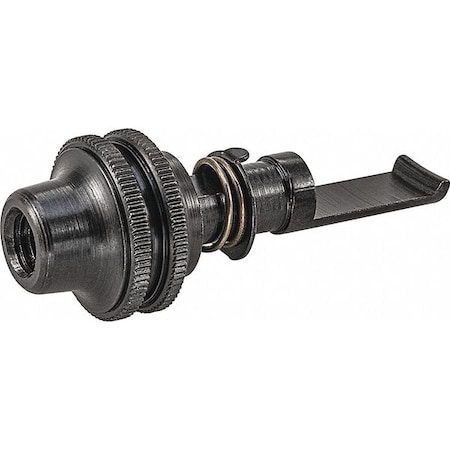
Starrett Replacement Lock Bolt Assembly For 11H-12-4R and C11H-12-4R, Steel PT99006 | Zoro
Order Starrett Replacement Lock Bolt Assembly For 11H-12-4R and C11H-12-4R, Steel, PT99006 at Zoro.com. Great prices & free shipping on orders over $50 when you sign in or sign up for an account.
 www.zoro.com
If you decide to sell, I may be interested in one to fit a 9", or 4" Gotta check my stash.
Last edited:
The smooth Starrett ones are forged and hardened......So far, I’ve added a texture-finish one to a smooth-finish Starrett square, based on the shape of the nut and the double notch that allows the pin to reverse 180°. .....
More desirable than the textured ones which are cast iron.
(am I misunderstanding?)
RTM
Well-known member
I think that is correct. The only marked HARDENED ones I’ve seen were smooth, but I have several unmarked ones.The smooth Starrett ones are forged and hardened.
More desirable than the textured ones which are cast iron.
(am I misunderstanding?)
The marking is on the skinny face 90° from the bearing surface.


Looking among the different designs, there are a few points of comparison in addition to the shape of the openings.
1 brand stamp
2 awl grip (missing in this example)
3 transition to the 45° face
4 nut shape: short/long, knurl, single/divided grip, rounded, beveled, square
5 means of holding/reversing bolt
6 length parallel to rule
This one is unmarked, lacks a hump at the return to the 45°, has the same nut, but no external notches no bolt sleeve, and is shorter along the rule face.

Then this one is smooth, has differently shaped openings, a reduced hump at the return to the 45°, but has the brand on a raised oval on the side, includes the notches

Then, I notice there are nuts that look really similar to Starrett, but are shorter.


RTM
Well-known member
Nice job gathering all the points of difference. I've always used the checkering as a sure Starrett tell, and the shape of the nut.
Looking among the different designs, there are a few points of comparison in addition to the shape of the openings.
1 brand stamp
2 awl grip (missing in this example)
3 transition to the 45° face
4 nut shape: short/long, knurl, single/divided grip, rounded, beveled, square
5 means of holding/reversing bolt
6 length parallel to rule
This one is unmarked, lacks a hump at the return to the 45°, has the same nut, but no external notches no bolt sleeve, and is shorter along the rule face.
Then this one is smooth, has differently shaped openings, a reduced hump at the return to the 45°, but has the brand on a raised oval on the side, includes the notches
Then, I notice there are nuts that look really similar to Starrett, but are shorter.
I've never looked to see if my center heads have different nut size than the combo heads.
And catching the hump at the 45, well done, never even noticed.
Mine are in three different locations, will try to track this down later.

Aside from the heads, the rules are interesting. The top three are essentially identical, but the bottom one has the model and logo shifted an inch to the left and mostly lower-case letters. I think it may be older than those at top.

LesserSon — these are great examples. Do you know of a source where Starrett combo squares (and double squares) are age-dated according to finish and design? I have a clear sense that the "basketweave" design ones are ca. WW 1 up to some point in the 1930s. Then?
 And then the type without the logo symbol. Top one includes “Made in USA,” bottom one is really degraded (also bent, though it doesn’t show in this pic), but obviously different from those at top. The third from top is a No4R GRAD. Have to look that one up yet.
Last edited:
No, I don’t know anything yet. I’m asking the same question at the bottom of post24.LesserSon — these are great examples. Do you know of a source where Starrett combo squares (and double squares) are age-dated according to finish and design? I have a clear sense that the "basketweave" design ones are ca. WW 1 up to some point in the 1930s. Then?

RTM
Well-known member
Here are the gradationsThe third from top is a No4R GRAD. Have to look that one up yet.
4R is 8th, 16th, 32nd, 64th inch.
7 was also offered as an option on combo squares, but 4 sent as a standard.
It replaces the 8th with 100th, a real bear to read for these aging eyes.

Starrett Tools 50th Anniversary : Catalog No. 25 : L. S. Starrett Co. : Free Download, Borrow, and Streaming : Internet Archive
388 p., illus., 18.7 cm, trade catalog
archive.org
4 has the same gradations. I wonder if the R indicates the “quick read” numerals between the inch marks.Here are the gradations
4R is 8th, 16th, 32nd, 64th inch.
There is mention in the catalog you posted of a “reverse” option, but I don’t see “R” explained.
Bob-B
Well-known member
Starrett also made scales in quick reading 32nds, 64ths, 50ths and 100ths. Those were 16R graduations and commonly used in the aircraft industry. I 1st saw them when I went to work at Fairchild Republic. Never saw them before in the machinery business..